Nathan H. Dize’s work is situated at the intersection of French Caribbean literary and intellectual history, African Diaspora studies, translation studies, and the digital humanities.
Assistant Professor of French at Washington University in Saint Louis, Nathan H. Dize earned his Ph.D from Vanderbilt University. His research has earned him fellowships from the Center for Race, Ethnicity, and Equity (WashU), the Digital Library of the Caribbean, the Andrew W. Mellon Foundation, and the New York Public Library’s Schomburg Center for Research in Black Culture. His teaching earned him the Outstanding Faculty Award in 2025-2026 from the WashU Graduate and Professional Student Council.
Professor Dize’s first book, Attending to the Dead: Haitian Literature and the Practice of Mourning, examines how Haitian writers memorialize loss, whether of a prominent historical figure, a compatriot, a literary forebear, or a dear loved one. The first full-length study of mourning in Haitian literature, the book offers close, contextually grounded readings of a vast body of work—from Alfred Nemours’s Histoire de la captivité et de la mort de Toussaint Louverture to Massillon Coicou’s poetry and Marie Chauvet’s celebrated triptych Amour, colère et folie, to the many literary afterlives of novelist Jacques Stephen Alexis and Radio Haiti founder Jean Léopold Dominique. Attending to the Dead will be released by SUNY Press in 2027.
Handle with Care: Legacies of African American Translators of Francophone African and Caribbean Literature is an interdisciplinary book project – grounded in African American studies, French studies, and Translation studies – that uses close-reading practices to understand how African American translators of Francophone African and Caribbean literature crafted translations that challenged academic disciplines as well as literary canons and markets.
Professor Dize has authored articles and book chapters on Caribbean Digital Humanities, Francophone Caribbean women’s cultural history, Haitian literature and film, and Translation studies. He has published in archipelagos journal, Caribbean Quarterly, the French Review, the Journal of Haitian Studies, LitHub, Palimpsest: A Journal on Women, Gender, and the Black International, Studies in Twentieth and Twenty-First Century Literature, small axe: a journal of Caribbean criticism, sx salon, and Words Without Borders.
He is a founding member of the Kwazman Vwa collective, a member of the digital networks of Fanm Rebèl and Rendering Revolution: Sartorial Approaches to Haitian History, and a founding editor of the digital history project, A Colony in Crisis: The Saint-Domingue Grain Shortage of 1789.
Professor Dize is a co-editor (along with Drs. Annette Joseph-Gabriel and Vanessa K. Valdés) of the Global Black Writers in Translation book series with Vanderbilt University Press.
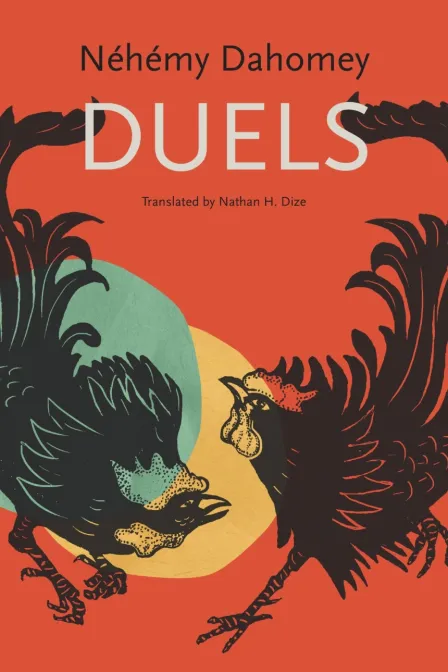
Professor Dize is also an accomplished translator of Haitian literature. His translations include the novels The Immortals and The Emperor by Makenzy Orcel, I Am Alive by Kettly Mars, Antoine of Gommiers by Lyonel Trouillot, and Duels by Néhémy Dahomey. He has translated poetry and short prose from French and Haitian Creole (Kreyòl) by Jean D’Amérique, James Noël, and Évelyne Trouillot.
For a selection of translations, poems and excerpted works, lectures, and interviews see below:
Lectures
Saint Louis University’s Campus Read Series: “La Traversata (“The Crossing”): Lessons from Jhumpa Lahiri as a Translator”
Interviews
“Nathan Dize” with Ashley Newby of the Black Studies Podcast
“Translating as an Act of Care: Interview with Translator Nathan Dize & Corine Labridy”
“The Immortals” Nathan Dize with Patrick Jean-Baptiste on the Nèg Mawon Podcast
Poetry
“Poem for Children with Trouble Sleeping” by Jean D’Amérique
“Black Prayer” by James Noël
Excerpted and Short Fiction
“The Other Side of the Sun” by Kettly Mars
“I Am Alive” by Kettly Mars
“Antoine of Gommiers” by Lyonel Trouillot